Why Eating Before Your Lunch Workout Changes Everything
Quick Answer: Whether to eat before a lunch workout depends on how long before you can eat, and what kind of session it is. Under 60 minutes, eat something small and low in fat and fibre, 20 to 40 grams of easily digested carbohydrate. Over 90 minutes, a normal balanced meal works well. For an easy session, fasted is fine. For anything hard, eating something almost always beats eating nothing — and the afternoon energy crash people blame on the workout is usually a missed meal.
The classic lunch-workout mistake is not the workout.
It is arriving at 2 p.m. having eaten a protein bar at 11:30 and nothing since, and then blaming the training for a wrecked afternoon.

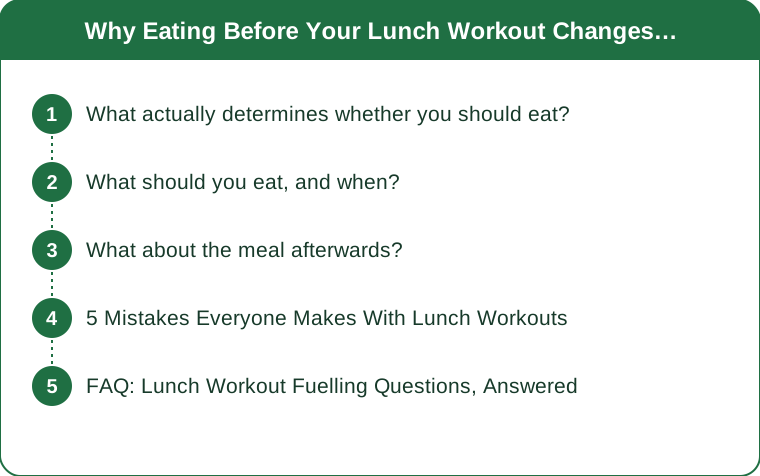
What actually determines whether you should eat?
Two variables. Everything else is detail.
How much time you have before you start. This determines what your stomach can process. Digestion of a mixed meal takes hours; a small carbohydrate snack clears in well under an hour.
How hard the session is. Easy steady work runs perfectly well on stored fuel. High-intensity work depends more on available carbohydrate, and performance in that domain is measurably better with something in the tank.
Session length matters at the margin. Anything under about 45 minutes rarely runs out of fuel. Beyond an hour of hard work, pre-session intake matters more.
Your own tolerance is real and individual. Some people train comfortably 30 minutes after a sandwich; others need two hours. This is not something to override with general advice — test it.
What you ate at breakfast counts. A substantial breakfast at 8 a.m. means you are not remotely fasted at midday. The overnight-fasted logic does not apply to a lunchtime session.
The afternoon matters as much as the session. Optimising the workout while ruining the following four hours of work is a bad trade, and it is the most common version of this mistake.
What should you eat, and when?
Three windows, three different answers.
Over 90 minutes before: a normal meal. Balanced, with protein, carbohydrate and some fat. Around 400 to 600 calories works for most people. This is the easiest scenario and the best one if your schedule allows it.
Sixty to ninety minutes before: a smaller, lower-fat version. Skip the heavy fats and large fibre loads. A chicken and rice bowl, a bagel with a little protein, or yoghurt with fruit.
Under 60 minutes: small, mostly carbohydrate, low fat and low fibre. 20 to 40 grams of carbohydrate. A banana, a slice of toast with honey, a small handful of dried fruit, or a sports drink. Protein in small amounts is fine; fat and fibre are what cause problems.
Under 20 minutes: liquid or nothing. A sports drink or diluted juice if you need something. Solid food this close is usually more trouble than it is worth.
Avoid high fat and high fibre close to training. Both slow gastric emptying, which is exactly what causes the heavy, sloshing feeling during a session.
Caffeine is a legitimate option. 100 to 200 milligrams roughly 45 minutes before improves perceived effort and performance for most people. Be aware of what it does to your sleep if you are caffeine sensitive.
Hydrate before, not during. 400 to 500 millilitres in the hour beforehand, then sip during. Drinking a large volume immediately before is uncomfortable.

What about the meal afterwards?
This is the part that determines your afternoon, and it is the part most people get wrong.
Eat within about an hour of finishing. The anabolic window is far wider than it was once thought, but the practical issue is not muscle protein synthesis — it is that skipping this meal produces the 3 p.m. crash.
Include protein and carbohydrate. Roughly 20 to 40 grams of protein and a real serving of carbohydrate. This restores glycogen and supports recovery.
Do not make it a token snack. A protein bar is not lunch. If your pre-session meal was small, your post-session meal needs to be a genuine meal.
Watch the fat content if you have an afternoon of concentration ahead. A very heavy meal after training compounds post-exercise fatigue for some people.
Rehydrate deliberately. Aim to replace what you lost. A 500 millilitre bottle over the following hour is a reasonable default for a moderate session.
Include some sodium if you sweat heavily. Especially in a warm gym. Salt on the food is usually sufficient.
The 3 p.m. crash is almost always underfuelling. People attribute it to the workout when the actual cause is 500 calories eaten across a day that included a training session.
Plan the food before you plan the session. Pack the post-workout meal in the morning. Deciding at 1:15 p.m. with 20 minutes left is how the token snack happens.
Seasonal note: as it gets colder, appetite often increases and the temptation to skip a proper post-session meal in favour of a hot drink and something sweet rises. Having a real meal packed handles it.
5 Mistakes Everyone Makes With Lunch Workouts
1. Eating nothing before and a token snack after. The single most common pattern, and the direct cause of the afternoon crash people blame on training.
2. Eating a normal lunch 25 minutes before. Fat and fibre do not clear that fast. The result is a heavy, uncomfortable session.
3. Treating a hard session like an easy one. Fasted works fine for steady work and poorly for intervals or heavy lifting.
4. Not hydrating until after. Arriving already slightly dehydrated from a morning of coffee and meetings is common and measurably degrades performance.
5. Leaving no time to actually eat. A 45-minute lunch break with a 35-minute session leaves ten minutes. Shorten the session to 25 minutes and eat properly — the trade is worth it.
FAQ: Lunch Workout Fuelling Questions, Answered
Is fasted training better for fat loss?
Total daily energy balance is what determines fat loss. Fasted training does not produce better long-term fat loss in the research, though some people prefer how it feels.
What if eating anything makes me feel sick?
Start with liquid carbohydrate — a sports drink or diluted juice. Tolerance usually improves with repeated exposure over a few weeks.
How long should I actually wait after eating?
Most people are comfortable 60 to 90 minutes after a small meal and two to three hours after a large one. Test your own threshold.
Does a protein shake count as a pre-workout meal?
It is a reasonable option close to a session because it is low in fat and fibre and clears quickly. Add a carbohydrate source if the session is hard.
Should I take caffeine every day?
Tolerance builds, and daily use reduces the acute effect. Many people reserve it for harder sessions.
What if my break is only 30 minutes?
Do a 20-minute session, eat before at your desk if you can, and eat properly afterwards. Short and consistent beats long and abandoned.
TL;DR:
- Two variables decide it: time before the session and how hard the session is.
- Under 60 minutes: 20 to 40 grams of carbohydrate, low fat, low fibre.
- Over 90 minutes: a normal balanced meal.
- The post-session meal is what protects your afternoon — protein plus real carbohydrate within an hour.
- The 3 p.m. crash is underfuelling, not the workout.
Pack the post-workout meal in the morning. That one habit fixes most lunch-workout problems.
Keep Reading
This article is for general informational and styling purposes only. Fit, sizing, and product availability may vary.