Why the Ten-Minute Lunch Walk You Actually Do Beats the Thirty-Minute Workout You Keep Skipping
An ambitious thirty-minute lunch workout plan that gets skipped three days out of five delivers less real benefit over a month than a modest ten-minute walk done every single day, because consistency compounds in a way that occasional intensity simply can’t match.

Why Consistency Compounds Faster Than Intensity
The math: the cumulative-weekly-volume-of-a-daily-ten-minute-habit-actually-exceeds-a-thirty-minute-session-done-only-twice-a-week (the cumulative weekly movement volume of a modest ten-minute habit done every workday actually exceeding the total volume of an ambitious thirty-minute session that only survives the schedule twice a week, a straightforward math result that consistency advocates rely on, per the lunch-break-walk-guide logic — the cumulative-weekly-volume-of-a-daily-ten-minute-habit-actually-exceeding-the-total-volume-of-an-ambitious-thirty-minute-session-that-only-survives-the-schedule-twice-a-week), and the reframe (the smaller daily habit, on paper, delivering more total weekly movement than the bigger plan that keeps getting skipped)).

Why the Ambitious Plan Collapses Under Real Scheduling Pressure
The failure mode: the thirty-minute-workout-requires-a-large-uninterrupted-block-that-a-single-unpredictable-meeting-can-eliminate-entirely (a thirty-minute workout requiring a large, uninterrupted block of the lunch hour that a single unpredictable meeting, call, or deadline can eliminate entirely, while a ten-minute walk fits into almost any gap that remains, per the micro-workout-workday logic — the thirty-minute-workout-requiring-a-large-uninterrupted-block-that-a-single-unpredictable-meeting-can-eliminate-entirely-while-a-ten-minute-walk-fits-into-almost-any-remaining-gap), and the frame (the bigger plan’s fragility to normal workday disruption, not lack of willpower, being the real reason it keeps getting skipped)).
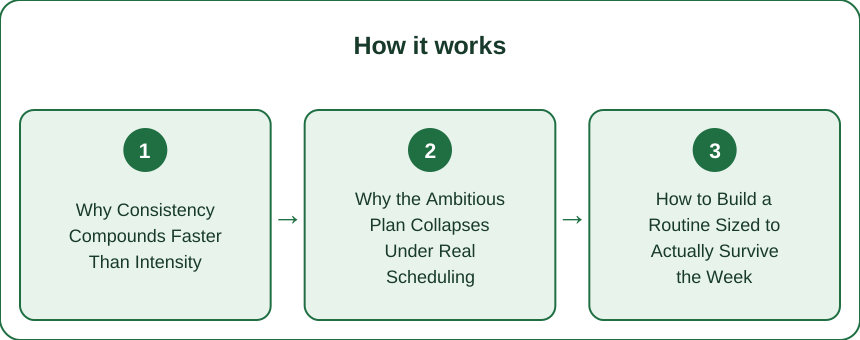
How to Build a Routine Sized to Actually Survive the Week
The practical build: the set-the-daily-default-at-a-size-that-fits-even-a-bad-day-and-treat-anything-longer-as-a-bonus (setting the daily default lunch-break movement at a size that comfortably fits even on a genuinely bad day, and treating any longer session as a welcome bonus rather than the actual target, per the desk-strength-resistance-band logic — the setting-the-daily-default-at-a-size-that-comfortably-fits-even-on-a-genuinely-bad-day-and-treating-any-longer-session-as-a-bonus-rather-than-the-target), and the frame (sizing the target to the worst realistic day, not the best one, as what actually makes a lunch routine stick)).
The cumulative weekly movement volume of a modest ten-minute walk done every single workday actually exceeds the total volume of an ambitious thirty-minute session that only survives the schedule twice a week, because the bigger plan requires a large uninterrupted block that a single unpredictable meeting can eliminate entirely, while a short walk fits into almost any gap that remains. Setting the daily default at a size that comfortably fits even on a genuinely bad day, and treating any longer session as a bonus rather than the actual target, is what lets a lunch-break routine survive a busy week instead of collapsing under it.
Keep Reading
This article is for general informational and styling purposes only. Fit, sizing, and product availability may vary.