Why a Lunch Workout Sometimes Leaves You More Tired for the Afternoon
Quick Answer: A lunch workout followed immediately by a heavy meal — or done on an empty stomach with no refuel — is the most common reason for afternoon crashes. The fix is a light pre-workout snack and a balanced post-workout meal, not skipping the session.
You squeezed in a solid 30-minute session, felt great walking back to your desk, and then hit a wall by 2pm. That crash isn’t the workout’s fault — it’s almost always what happened around it.

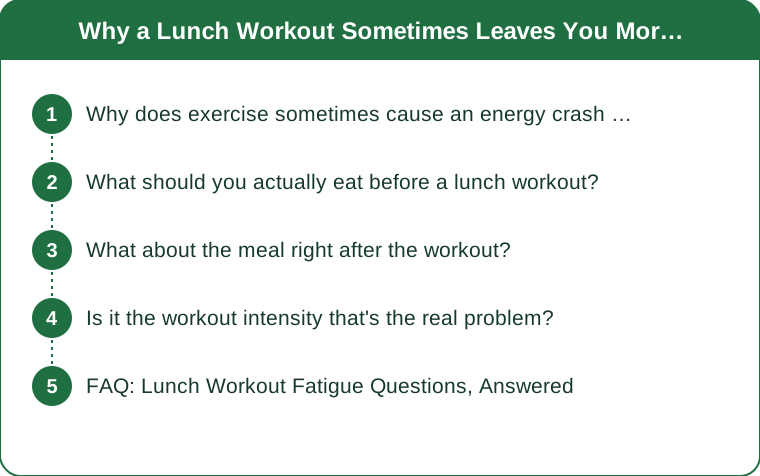
Why does exercise sometimes cause an energy crash instead of a boost?
Exercise on a near-empty stomach can leave blood sugar low afterward, and then eating a large, carb-heavy lunch right after a workout can trigger a sharper insulin response and subsequent blood sugar dip — the classic post-lunch slump, amplified by the workout’s own fatigue.
The combination of depleted energy stores plus a big rebound meal is a near-perfect setup for an afternoon crash.
What should you actually eat before a lunch workout?
A small carbohydrate-forward snack 30-60 minutes before — half a banana, a small handful of dried fruit, or a rice cake — provides quick fuel without leaving you working out on a full stomach. Skip protein-heavy or high-fat pre-workout snacks close to training; they digest slower and can feel heavy mid-session.

What about the meal right after the workout?
This is the piece most people get backwards. A balanced post-workout meal — some protein, some complex carbs, and vegetables — refuels without the blood sugar spike-and-crash pattern of a large simple-carb lunch (think a big pasta bowl or a sandwich on white bread eaten fast).
Eating within 60-90 minutes post-workout, at a normal portion rather than an oversized ‘I earned it’ portion, tends to support afternoon energy rather than tank it.
Is it the workout intensity that’s the real problem?
Sometimes, yes — a genuinely max-effort session at lunch can leave real central fatigue that no amount of food timing fixes, and that’s a legitimate reason to scale intensity down on workdays specifically, saving harder sessions for evenings or weekends when a nap or slower afternoon is an option.
FAQ: Lunch Workout Fatigue Questions, Answered
Is it better to skip lunch entirely if I work out midday?
No — skipping food around a workout often worsens the afternoon crash rather than preventing it. A light snack before and a balanced meal after work better than skipping.
How long should I wait after a lunch workout to eat?
Within about 60-90 minutes is a reasonable general window for most people, though there’s no need to eat immediately if you’re not hungry.
Should I lower workout intensity on days I need to be sharp afterward?
That’s a reasonable strategy — save your hardest efforts for days without demanding afternoon meetings, and keep midday sessions moderate.
TL;DR:
- The crash usually comes from meal timing, not the workout itself
- Light carb snack 30-60 min before; balanced meal within 60-90 min after
- Avoid a big simple-carb lunch immediately post-workout
- Scale intensity down on days you need afternoon focus
The workout isn’t the enemy of your afternoon — the meal around it usually is.
Keep Reading
This article is for general informational and styling purposes only. Fit, sizing, and product availability may vary.