What to Eat Before a Lunch Break Workout (and What to Skip)
Quick Answer: Eat a small, easily digestible snack 30-60 minutes before a lunch workout — like a banana or a handful of crackers with peanut butter — and save your full lunch for after, since a heavy meal right before movement causes sluggishness and cramping.
The worst lunch-break workouts aren’t the ones where you’re tired — they’re the ones where you ate a full sandwich 15 minutes beforehand and now every jog feels like carrying a brick.

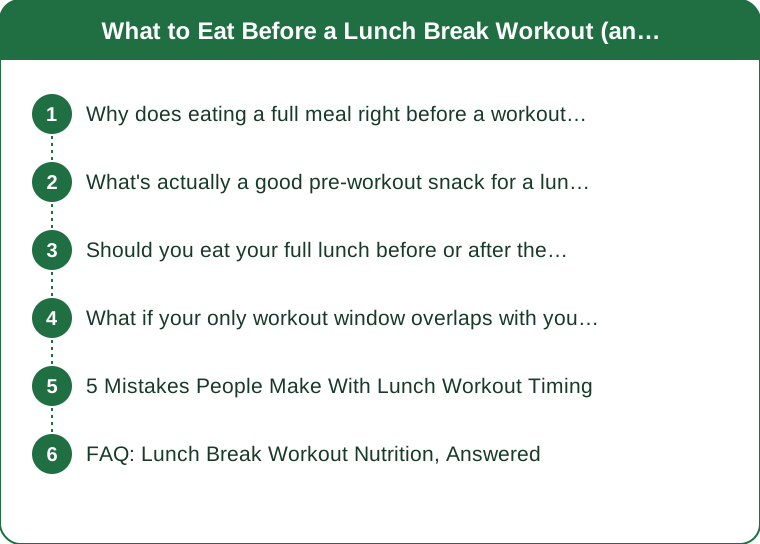
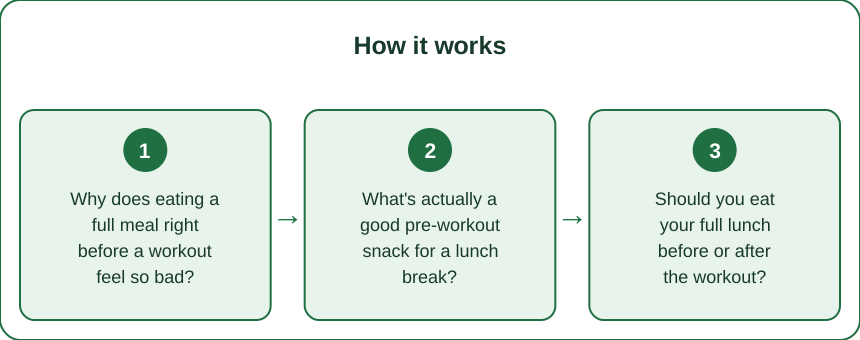
Why does eating a full meal right before a workout feel so bad?
Digestion diverts blood flow to your stomach, competing directly with the blood flow your muscles need during exercise. A large meal sitting undigested also increases the odds of cramping, especially in movements that compress your midsection like running or planks. The fix isn’t skipping food — it’s shrinking the portion and timing it earlier.
What’s actually a good pre-workout snack for a lunch break?
Something with quick-digesting carbs and a little protein, roughly 150-250 calories: a banana, a small yogurt, a few crackers with nut butter, or half a granola bar. Avoid high-fat or high-fiber foods right before, since both slow digestion and are more likely to sit heavy during movement.
Should you eat your full lunch before or after the workout?
After, in almost every case. Save the bulk of your meal for post-workout, when your body can actually use the protein and carbs for recovery without competing against exercise demands. This also solves the common problem of feeling too full to move well right after eating.

What if your only workout window overlaps with your only eating window?
Split it: eat half your lunch — the lighter, carb-focused half — beforehand, then finish the rest (usually the protein and vegetables) once you’re back at your desk. This keeps you fueled without the heavy-stomach problem, and it’s a realistic compromise when your schedule genuinely doesn’t allow separate windows.
5 Mistakes People Make With Lunch Workout Timing
1) Eating a full meal 10 minutes before exercising — leaves no digestion buffer. 2) Skipping food entirely on an empty stomach — leads to low energy and dizziness mid-session. 3) Choosing high-fat foods as a pre-workout snack — slows digestion right when you need blood flow elsewhere. 4) Drinking a large amount of water right before intense movement — can cause stomach sloshing and discomfort. 5) Not planning the post-workout meal at all — leaving you starving and reaching for whatever’s closest by 2pm.
FAQ: Lunch Break Workout Nutrition, Answered
Is coffee okay before a lunch workout?
A small coffee 30-45 minutes beforehand is fine for most people and can even improve performance, but avoid it on an empty stomach if you’re prone to jitters or stomach upset.
How much water should you drink before a midday workout?
A few sips in the 15 minutes before is enough — front-load your hydration earlier in the morning instead of chugging water right before you move.
What should you eat immediately after a lunch break workout if you’re short on time?
A quick protein source like a pre-made shake or a hard-boiled egg with fruit covers the immediate recovery need until you can eat a fuller meal later.
TL;DR:
- Eat a small carb-focused snack 30-60 minutes before, not a full meal
- Save the bulk of lunch for after the workout when your body can use it
- Split your meal if your schedule genuinely doesn’t allow separate windows
- Avoid high-fat, high-fiber foods right before moving
Timing, not willpower, is usually what separates a lunch workout that feels good from one that feels like dragging a brick around the block.
Keep Reading
This article is for general informational and styling purposes only. Fit, sizing, and product availability may vary.